
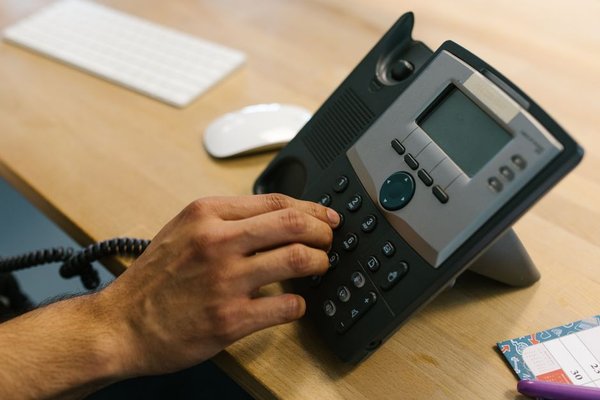
A debt collector calling your office can turn a private financial issue into an uncomfortable workday. U.S. federal law puts meaningful limits on debt collector workplace calls. Those limits depend on what the collector knows about your workplace and your communication preferences.
You do not have to explain your finances to colleagues to make the calls stop. Understanding the rules helps you set a clear boundary without ignoring a legitimate debt.
Can a Debt Collector Legally Call You at Work?
Sometimes, yes. The Fair Debt Collection Practices Act (FDCPA) does not automatically prohibit every initial workplace call. However, a debt collector generally cannot communicate or attempt to communicate with you at your place of employment if the collector knows or has reason to know your employer prohibits such contact. This protection appears in federal Regulation F, section 1006.6(b)(3).
The collector also generally cannot contact you at a time or place they know is inconvenient for you. A workplace call may be improper even when your employer does not have a blanket ban on personal calls, provided you have made the inconvenience clear.
These FDCPA contact rules primarily govern covered debt collectors, such as many third-party collection agencies. An original creditor collecting its own debt may be subject to different federal or state protections. State laws sometimes provide broader rights.
Why Your Employer’s Phone Policy Matters
You do not need to hand over an employee handbook to establish that workplace collection calls are prohibited. The Consumer Financial Protection Bureau explains that telling a collector you cannot take personal calls at work can give that collector reason to know your employer’s restrictions. A collector may ask reasonable questions to clarify the policy.
Be specific. Saying, “My employer does not permit personal collection calls at this workplace. Do not call me here again,” communicates more than simply saying you are busy. If work calls are permitted but debt collection conversations interrupt your duties, explain that the workplace is an inconvenient location for contact.
What if the Collector Calls Your Personal Cellphone During Work?
A call to your personal cellphone is not necessarily a call to an employer’s phone system. Still, the inconvenient-time-or-place rule can matter. Tell the collector that you cannot receive calls during your shift and identify a permitted contact method, if you want to provide one. Giving a personal number does not mean agreeing to calls at any hour or location.
Work Email, Receptionists, and Coworkers
Workplace privacy is about more than who answers the phone. Federal rules generally prohibit a debt collector from emailing an address the collector knows your employer provided.
Collectors also generally cannot discuss your debt with coworkers, supervisors, or reception staff without an applicable legal exception. Limited contact to obtain location information may be permitted, but that does not authorize telling colleagues what you owe. A message announcing that you are behind on payments could raise a separate privacy issue.
If your office uses a shared voicemail or a receptionist screens calls, ask the collector not to leave messages there. You should not have to reveal a debt to your manager just to protect your privacy.
How to Stop Collector Calls at Your Workplace
Make a Clear Request
Tell the caller that work is not an acceptable place to reach you. State whether your employer prohibits personal calls and whether you want the collector to stop using the office number altogether. Under Regulation F, you can also request that a collector not use a particular telephone number or communication medium. A clear oral request can establish that restriction, subject to narrow legal exceptions.
Follow Up in Writing
Send a brief email or letter that identifies the collection account, if known, and says: “Do not contact me at my workplace or call [office number]. My employer prohibits these calls. Please use postal mail at my designated address instead.” Keep a copy and proof of delivery when possible.
If you want all collection communications to stop, that is a different request. A written cease-communication notice triggers broader FDCPA restrictions, although limited legally permitted notices may follow. Stopping contact does not cancel the debt or prevent a collector from pursuing lawful collection remedies.
Keep a Workplace Call Log
Suppose a hospital employee tells a collector on Monday that personal calls are barred on the ward. The collector phones the ward on Wednesday and Friday anyway. The employee should record each date, time, caller identity, number, what was said, and whether a receptionist answered. That timeline helps show when the collector learned of the restriction and what happened afterward.
Save voicemails, messages, and written requests. Avoid secretly recording conversations without checking the applicable state recording-consent laws.
What to Do if the Calls Continue
If a debt collector at work keeps calling after being told about the restriction, you can submit a complaint to the Consumer Financial Protection Bureau or your state attorney general. You may also speak with a consumer-protection attorney about whether the facts support an FDCPA claim.
Meanwhile, separate the contact problem from the debt itself. Check the collector’s validation information and dispute an inaccurate debt promptly. For covered collections, a timely written dispute during the validation period generally requires the collector to pause collection until verification is provided. Learning how to dispute a debt and how to review a debt validation notice can help you respond without discussing payment at work.
Frequently Asked Questions
Can a Debt Collector Call My Boss?
A collector generally cannot tell your boss about your debt. There are narrow rules allowing some third-party contact for location information, but they do not permit an ordinary conversation about your balance or repayment. An employer’s restriction on collection calls must also be respected when the collector knows about it.
Do I Have to Prove My Workplace Bans Personal Calls?
Not necessarily. Telling the collector that your employer prohibits personal calls can be enough to put the collector on notice. Providing a written statement creates a useful record if workplace collection calls continue.
Can I Tell a Collector to Contact Me Only by Mail?
You can ask the collector not to use telephone calls and provide a mailing address. Federal rules recognize requests to stop using a particular communication medium, with limited exceptions. Put your preference in writing so the instruction is easy to document.
Does Stopping Workplace Calls Make the Debt Disappear?
No. Restrictions on contact protect your workplace and privacy; they do not determine whether the debt is valid. Review the account details and address any dispute or repayment decision separately.
Protect Your Workday Without Ignoring Your Rights
Tell the collector clearly that workplace contact is prohibited or inconvenient, identify the number they must not use, and keep records. Handling a collection account should not require turning your workplace into a public discussion of your finances. If the boundary is ignored, your documentation can support a formal debt collection complaint.