
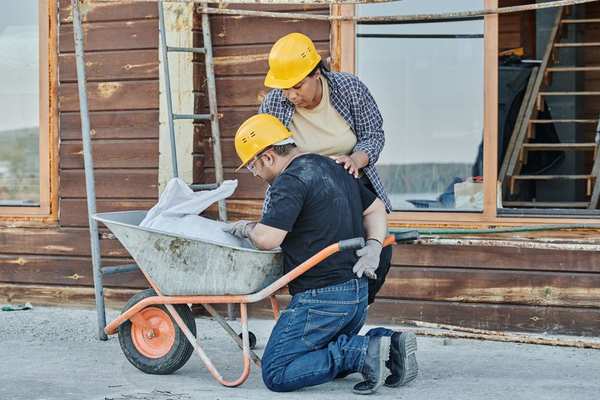
Construction sites are dangerous by design. Heavy machinery, scaffolding, exposed wiring, and workers moving in every direction create a level of risk you simply don’t find in most other workplaces. So when an accident happens, the aftermath is rarely simple. Medical bills pile up fast, time off work eats into your income, and figuring out who’s actually responsible can get complicated when multiple contractors and subcontractors are involved on the same job site. This is exactly why so many injured workers end up asking the same question: do I actually need a lawyer for this, or can I handle it myself?
The honest answer depends on the severity of your injury and the circumstances surrounding it. But there are clear signs that point toward hiring legal help sooner rather than later, and understanding those signs can save you from a lot of stress and lost compensation down the line.
What Makes Construction Site Injuries Different
Most workplace injury cases follow a fairly predictable path: you get hurt, you file a workers’ compensation claim, and the process moves forward through your employer’s insurance. Construction accidents often don’t work that way. A single job site might have a general contractor, several subcontractors, equipment rental companies, and property owners all present at once. That means more than one party could bear some responsibility for what happened to you.
This is where a construction accident claim starts to look very different from a typical workers’ comp case. If your injury was caused by a third party who isn’t your direct employer, such as a subcontractor who left a hazard unmarked or an equipment company that supplied faulty machinery, you may be able to pursue a separate injury claim in addition to workers’ compensation. That combination is often where the real value of a case lies, and it’s not something most people can sort out on their own.
Common Causes of Job Site Accidents
Some accidents happen because of bad luck. Far more happen because a safety standard was ignored. The most frequent causes include:
Falls from heights, whether from ladders, roofs, or elevated platforms, remain one of the leading causes of serious construction injuries. Scaffolding failures are a close second, and a scaffolding accident lawsuit often reveals that the structure was improperly assembled, overloaded, or missing required guardrails. Struck-by incidents, where a worker is hit by falling tools, materials, or moving vehicles, are also common, along with electrocution from exposed wiring and injuries caused by malfunctioning or poorly maintained heavy equipment.
What ties many of these incidents together is that they’re preventable. That’s an important detail, because it often means someone failed to follow a safety rule that already existed.
When an OSHA Violation Changes the Picture
The Occupational Safety and Health Administration sets detailed rules for how construction sites are supposed to operate, from fall protection requirements to equipment inspection standards. When an accident happens because one of those rules was ignored, it can significantly strengthen your case.
An OSHA violation injury claim carries extra weight because it shows the hazard wasn’t just unfortunate, it was a known risk that should have been addressed. If OSHA investigates your site after an accident and issues a citation, that documentation can become a key piece of evidence. A lawyer who regularly handles construction cases will know how to request OSHA records, interpret the findings, and use them to build a stronger claim on your behalf.
Signs You Should Hire a Construction Site Injury Lawyer
Not every job site injury requires legal representation. A minor cut that heals in a few days with no lost wages usually doesn’t need a lawyer involved. But certain situations almost always call for professional help:
Your injury requires surgery, hospitalization, or extended physical therapy. You’re unable to return to your previous line of work, either temporarily or permanently. Your employer or their insurance company is disputing the claim or offering a settlement that seems too low. Multiple parties, such as subcontractors or equipment suppliers, may share responsibility for what happened. Or an OSHA investigation is underway and you’re unsure how it affects your rights.
If any of these apply to you, waiting too long to speak with a lawyer can actually hurt your case. Evidence disappears, witnesses forget details, and there are strict deadlines for filing claims that vary depending on your state and the type of claim you’re pursuing.
How Compensation Is Determined
There’s no single formula that applies to every case, but a few factors consistently shape how much a claim is worth. The severity and permanence of your injury matters most, since long-term or life-altering injuries typically result in higher compensation than injuries you fully recover from. Lost wages, both past and future, are factored in, along with medical expenses that have already accrued and those expected down the road. Pain and suffering also plays a role, particularly in third-party claims that go beyond standard workers’ compensation.
Whether negligence can be clearly established also matters. A well-documented OSHA violation injury, for example, tends to support a stronger negligence argument than an accident with no clear safety failure behind it. This is one of the biggest reasons legal representation matters: an experienced lawyer knows how to gather the right evidence, calculate the true long-term cost of an injury, and negotiate from a position of strength rather than accepting whatever number is first offered.
What to Expect From the Legal Process
Most construction injury cases begin with a consultation where a lawyer reviews the details of your accident, your medical records, and any available documentation like incident reports or OSHA findings. From there, they’ll typically investigate the site conditions, identify all potentially liable parties, and determine whether you have a workers’ compensation claim, a third-party claim, or both.
Many cases settle before ever reaching a courtroom, especially once liability is clearly established and the responsible party’s insurer wants to avoid a lengthy legal battle. That said, having a lawyer who is prepared to litigate if necessary often leads to better settlement offers in the first place, simply because insurers know the case won’t be an easy dismissal.
Frequently Asked Questions
Do I need a lawyer if my employer already offered a settlement?
It’s worth having a lawyer review any settlement offer before you accept it. Initial offers are often lower than what a case is actually worth, especially if long-term medical care or lost future income hasn’t been fully accounted for.
Can I file a claim if I was partly at fault for the accident?
In many states, you can still recover compensation even if you share some responsibility for the accident, though the amount may be adjusted accordingly. A lawyer can explain how this applies in your specific state.
How long do I have to file a construction accident claim?
Deadlines vary depending on your state and whether you’re filing a workers’ compensation claim or a third-party lawsuit. Some deadlines are as short as one to two years, which is why it’s best not to delay speaking with a lawyer.
What if multiple companies were working on the site where I got hurt?
This is common on construction sites and often means more than one party could be liable. A lawyer will investigate the roles of each contractor, subcontractor, and equipment provider involved to determine where responsibility lies.
Construction site injuries can change the course of your life in ways that go far beyond the initial accident. If your injury is serious, if safety violations were involved, or if more than one party may be responsible, talking to a construction site injury lawyer early on isn’t just a precaution, it’s often the difference between a fair outcome and a settlement that falls short of what you actually need.